

Summary
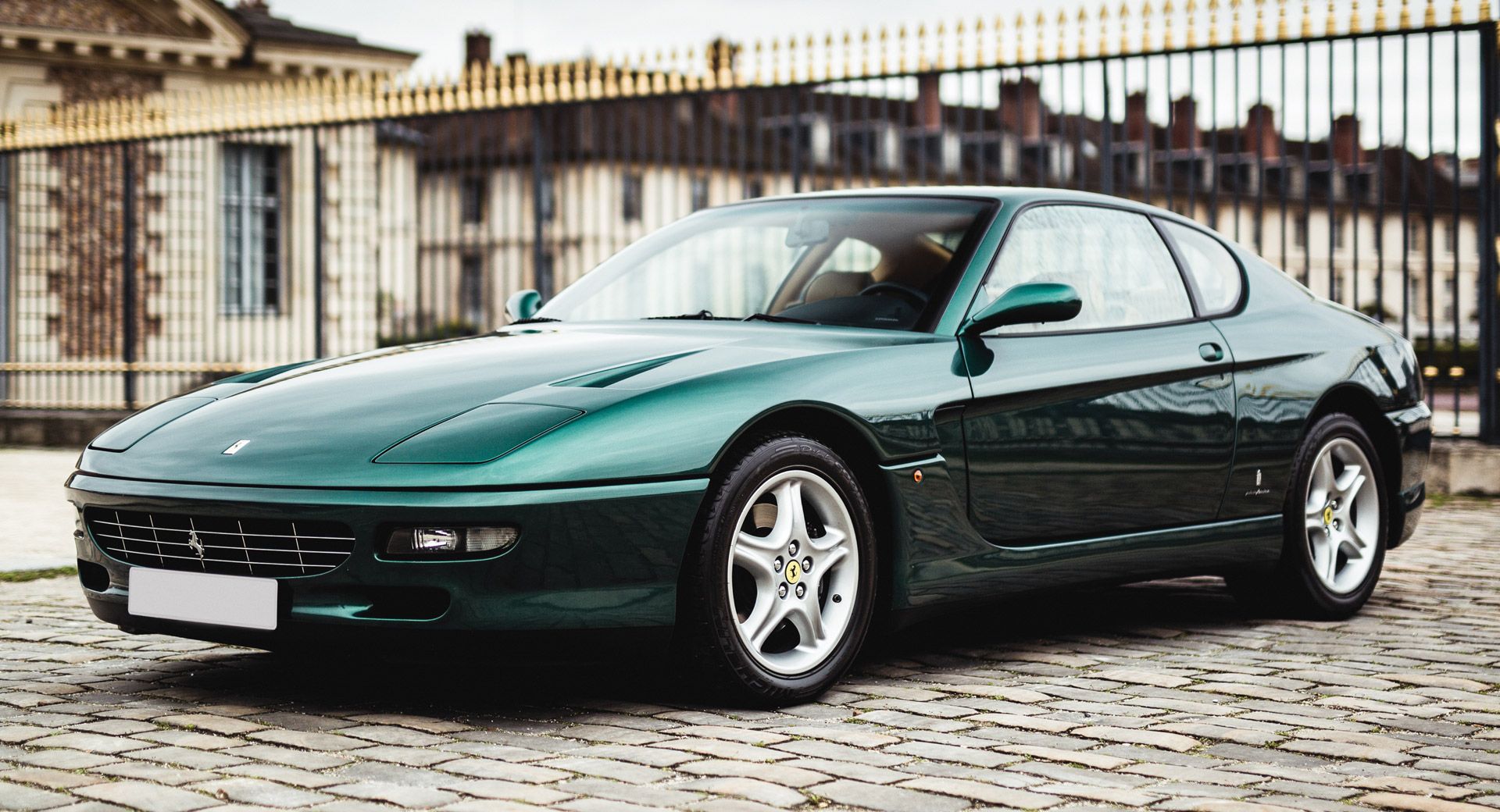
Adding a single letter—“A”—to the Ferrari 456 GT badge dramatically changes how enthusiasts and collectors view the car. While the 456 GT equipped with a six-speed manual transmission has become the preferred choice among Ferrari purists, the 456 GTA features a four-speed automatic that has never earned the same level of appreciation.
Although Ferrari produced significantly fewer automatic models during the 1990s, that rarity has done little to boost their value. Instead, the market overwhelmingly favors the manual version, leaving the GTA with a substantial price disadvantage.
The Price Difference Is Impossible to Ignore
The valuation gap between the two versions is striking.
According to Classic.com, the average value of a six-speed Ferrari 456 GT sits at $102,714, while the automatic 456 GTA averages just $54,111.
That’s a difference of nearly 47%, or approximately $49,000, between two cars whose primary distinction is their transmission.
The disparity remained almost unchanged after Ferrari introduced the facelifted 456M.
Current sales data shows:
- Ferrari 456M GTA: Average value of $51,954
- Ferrari 456M Manual: Average value of $112,047
Although an exceptionally well-preserved 456M GTA has approached the $100,000 mark, manual models consistently command significantly higher prices.
The same trend exists across Europe.
Swiss Ferrari specialist Niki Hasler estimates that an automatic 456 without documented service history may sell for around €80,000, while a comparable manual example can reach approximately €130,000.
His recommendation has remained consistent:
Always buy the manual.
Performance Was Never the Problem
The Automatic Transmission Was Well Engineered
Ironically, the automatic transmission itself isn’t responsible for the GTA’s lower market value.
Ferrari equipped the 456 GTA with a sophisticated four-speed automatic transmission developed by FF Developments (later Ricardo) using General Motors internals.
To maintain balanced weight distribution, Ferrari mounted the transmission alongside the rear differential rather than at the front of the vehicle.
The system also featured electronic transmission management, eliminating the need for a conventional kick-down mechanism.
According to Ferrari, the torque converter allowed the GTA to deliver acceleration and top-speed figures that were broadly comparable to the manual version.
The 456 GTA also marked the end of an era.
It became Ferrari’s final production road car equipped with a traditional torque-converter automatic, concluding a lineage that began with the Ferrari 400 in 1976. Future Ferrari models would transition to entirely different transmission technologies.
That doesn’t mean prospective buyers should ignore potential maintenance concerns.
Specialists note that repairs for these four-speed automatics can be expensive. Common warning signs include delayed gear engagement and rough or hesitant shifts.
Rarity Didn’t Increase the Value
An Unusual Exception in the Collector Car Market
In most collector car segments, limited production usually translates into higher values.
The Ferrari 456 GTA is a rare exception.
The original 456 launched in 1992 exclusively with a manual transmission.
Before the facelift:
- Manual production: 1,548 cars
- Automatic GTA production: 403 cars
That means the automatic accounted for only about 21% of first-generation 456 production, making it considerably rarer than the manual.
Under normal market conditions, such scarcity would increase demand and resale values.
Instead, the opposite happened.
Despite being almost four times less common, the automatic consistently sells at a substantial discount.
The facelifted 456M presents a slightly different production story.
Ferrari introduced both manual and automatic versions simultaneously, resulting in a much more balanced production split.
Interestingly, the automatic version originally carried a higher purchase price when new.
Today’s collector market, however, offers no reward for buyers who originally paid that premium.
Even greater rarity hasn’t changed perceptions.
Ferrari built only 61 right-hand-drive pre-facelift 456 GTA models, making them exceptionally uncommon.
Yet even these highly limited examples fail to command a meaningful premium.
Six Years of Refinement Didn’t Change Buyer Preferences
The 456M Improved the Car—but Not Its Value
In 1998, Ferrari introduced the updated 456M, with the “M” representing Modificata.
The facelift included several notable improvements.
Exterior revisions featured:
- Removal of the hood vents.
- A new carbon-fiber panel.
- Fog lights relocated from the bumper into the grille.
Inside the cabin, Ferrari upgraded materials and redesigned the interior with improved ergonomics, addressing one of the original model’s most common criticisms.
Some reviewers also believed the revised car felt quicker, despite Ferrari making no official increase to engine output.
Even with these improvements, the automatic version’s market value barely changed.
Recorded sales of the 456M GTA remain remarkably similar to those of the original 456 GTA, despite six years of development and widespread recognition that the facelifted model offered a more refined driving experience.
What Are Buyers Paying an Extra $49,000 For?
The Appeal of the Gated Manual Shifter
The numbers tell a clear story.
Collectors are willing to spend roughly $49,000 more for the manual version, despite the automatic offering:
- Comparable straight-line performance.
- Lower production numbers.
- A transmission well suited to a luxurious four-seat grand tourer.
The explanation appears to come down to driving experience rather than measurable performance.
For many Ferrari enthusiasts, the iconic gated manual shifter represents something that modern Ferraris no longer offer.
The distinctive metallic click as the gear lever moves through its open gate has become an experience in its own right—one that many collectors actively seek rather than simply accept.
This growing appreciation for traditional manual transmissions has become especially influential in today’s Ferrari market, where modern models no longer deliver the same level of analog driver engagement.
Ultimately, scarcity only adds value when it aligns with what buyers genuinely desire.
Buying a Ferrari 456 Today
Service History Matters More Than Transmission Choice
Whether choosing a manual or an automatic, buyers should carefully evaluate any Ferrari 456 before purchasing.
Mechanically, the model enjoys a solid reputation.
Its naturally aspirated 5.5-liter V12 was never pushed close to its engineering limits in this application, contributing to its durability.
Even so, comprehensive maintenance records remain essential.
Deferred servicing can quickly transform an apparently inexpensive purchase into a costly ownership experience.
While automatic 456 GTA models remain genuinely scarce, that rarity has done little to influence market demand.
Instead, most collectors continue to prioritize the manual driving experience above all else.
The Ferrari 456 GTA Is Still an Affordable Entry Into V12 Ownership
Despite its lower resale values, the Ferrari 456 GTA remains an appealing proposition.
Buyers receive a hand-built Ferrari V12, elegant Pininfarina/Scaglietti bodywork, and four genuinely usable seats—all for less than the price of many new mid-size SUVs.
For enthusiasts seeking the most affordable route into classic Ferrari V12 ownership, the GTA offers exceptional value.
However, those expecting rarity alone to drive future appreciation may be disappointed.
The collector market has consistently demonstrated that, in the case of the Ferrari 456, driver involvement outweighs production numbers. The significant price gap is driven far more by the emotional appeal of the gated manual transmission than by rarity, performance, or engineering differences.