

Summary
At the beginning of this year, I had already spent more than $300 on Anthropic usage credits. My default approach was simple: whenever I needed AI assistance, I reached for the most powerful flagship model available. Predictably, that decision caused me to hit my usage limits much sooner than expected.
On Claude, Opus 4.8 costs roughly 1.7 times as much as Sonnet 5, while the newer Fable 5 is approximately twice as expensive as Opus 4.8. Choosing the most capable model for every task quickly exhausted my available usage.
Whenever that happened, I faced a frustrating delay of four or even five hours before I could continue working. Since patience has never been one of my strengths, waiting was rarely an attractive option.
Anthropic makes it incredibly easy to purchase additional usage, with top-ups starting at just $5. At the time, spending another $5 always seemed like the better choice compared to losing five hours of productive momentum. Repeating that decision over and over eventually led to a surprisingly large bill.
It took me much longer than it should have to realize that relying on a flagship model for every prompt wasn’t helping either my budget or my overall workflow.
The $5 Top-Up Feels Small—Until It Doesn’t
Momentum Came at a Cost
The biggest issue with my previous workflow wasn’t simply the amount of money I spent. It was how effortless every top-up felt.
Whenever I reached my usage limit in the middle of a project, the decision seemed obvious: spend another $5 immediately or wait four hours while an unfinished project remained stuck in my head. Under those circumstances, paying always felt like the rational decision.
The real cost extended beyond money. Every forced interruption meant losing valuable context, making it necessary to rebuild my train of thought once I returned. Compared to that, another small payment appeared insignificant.
Only after reviewing my Anthropic billing history at the end of the quarter did I realize how much those seemingly harmless $5 purchases had accumulated. That moment forced me to rethink my entire workflow.
Most Prompts Didn’t Require a Flagship Model
Why Pay Fable 5 Prices for Qwen-Level Tasks?
When I finally audited my usage, I discovered something I had ignored for months.
Aside from occasional requests that genuinely benefited from deep reasoning, the overwhelming majority of my prompts involved routine work. These included boilerplate generation, summarization, brainstorming sessions, testing cycles, and repeated revisions.
Looking back, only about three out of every ten prompts actually required the advanced architectural reasoning or complex one-shot debugging that justified paying flagship pricing.
For example, a capable open-weight model could easily answer a question like whether Pygame or Tkinter would be the better choice for building a drag-and-drop level editor.
The real challenge wasn’t model capability—it was workflow.
Once you’re deeply invested in an ecosystem like Anthropic’s, or you’ve become accustomed to the quality of a particular model, switching to another model simply to reduce token costs becomes surprisingly inconvenient.
Maintaining a continuous conversation also matters. Keeping the full reasoning process inside one conversation gives the model the context needed for future refinements, making context transfer one of the biggest obstacles.
A Local AI Stack Solved Half the Problem—for Free
My 16GB of VRAM Was More Useful Than I Expected
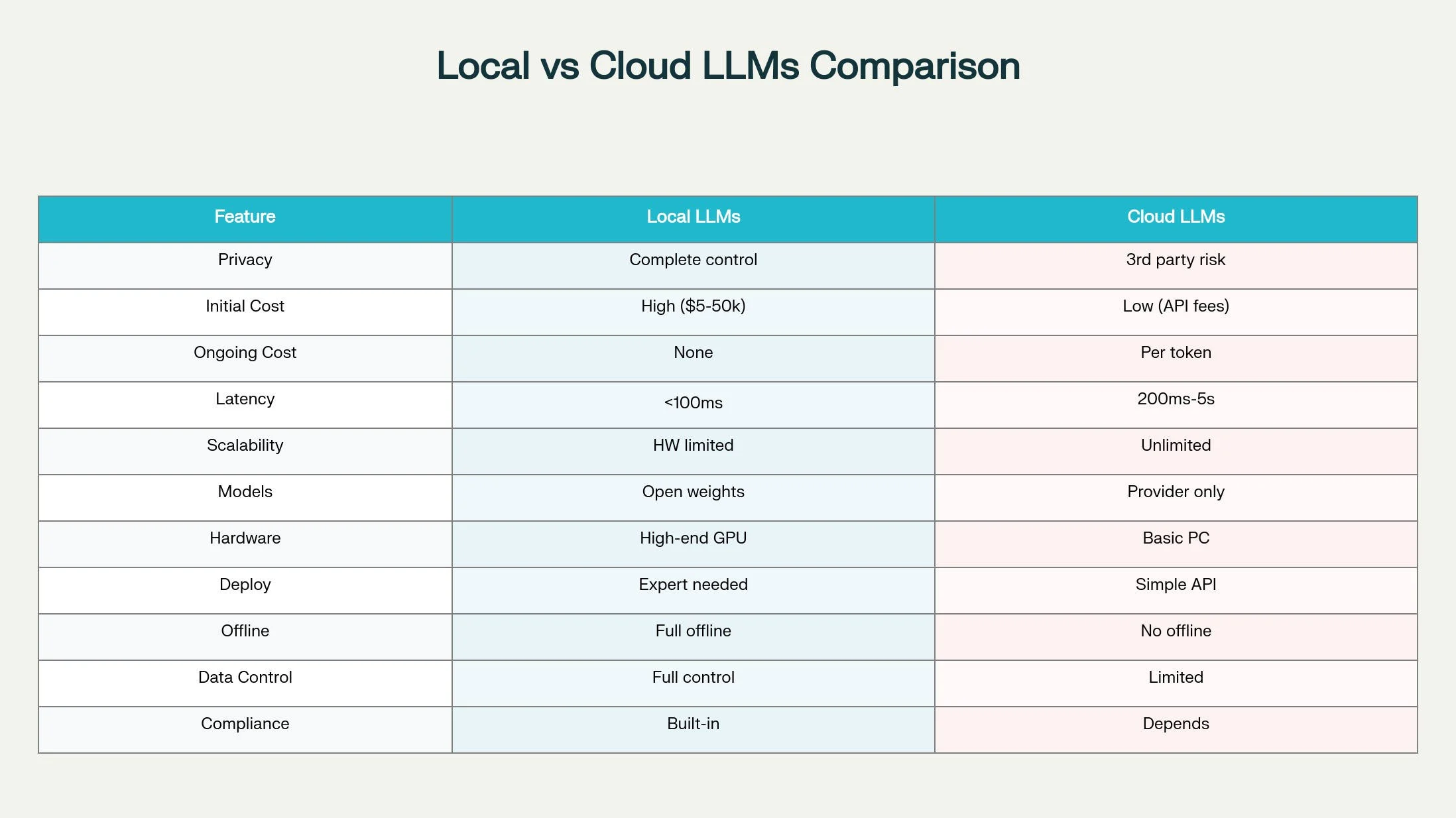
Fortunately, I had already built a capable workstation before the DRAM crisis, including an RTX 4070 Ti Super with 16GB of GDDR6X VRAM.
In hindsight, I realized I wasn’t taking advantage of that hardware.
The available VRAM allowed me to run Gemma 4 26B and Qwen3-Coder 30B in quantized GGUF format through Ollama, delivering performance that comfortably kept pace with my coding workflow.
Moving tasks between Claude and local models turned out to require more work than I initially expected.
Several months earlier, I had built Aria, a lightweight application consisting of a single Python script with a Flask backend and a browser-based chat interface. Its original purpose was completely different—it was designed to detect and manage Gemma 4’s hallucinations.
Later, I realized the same architecture could become a unified interface capable of working with both my local models and Claude.
To make that happen, Aria’s regex layer only required an updated set of routing parameters covering tasks such as drafting, summarization, brainstorming, and testing loops.
More demanding requests—including architectural decisions and difficult debugging sessions—would automatically be routed to Claude together with the current source code and the existing conversation history.
Behind the scenes, Gemma runs locally through Ollama, while Claude is accessed through Anthropic’s API.
Before each prompt is submitted, the interface clearly shows which model will handle the request, allowing me to consciously decide where my tokens are actually being spent.
The Flagship Model Is Still There—I Just Use It Intentionally
The biggest advantage of combining local models with Claude isn’t simply the money I’ve saved.
By creating a clear division of labor between models, I’ve significantly expanded the amount of premium usage available for tasks that genuinely deserve it.
Now that roughly seven out of every ten prompts are handled locally at no cost, my Anthropic allowance lasts much longer.
Instead of spending premium credits on routine drafting or brainstorming, I can reserve them for features that truly benefit from Claude’s capabilities, such as Claude Design and Interactive Visuals—features that previously felt impossible to justify after an entire day of coding.