

Summary
Mazda CX-70 Diesel Delivers Up to 850 Miles of Range, but It’s Not Available in the US
Diesel engines are steadily disappearing from the modern automotive market. Aside from commercial vehicles and heavy-duty trucks, most automakers have either significantly reduced their diesel offerings or eliminated them entirely, replacing them with cleaner alternatives such as hybrid and electric powertrains.
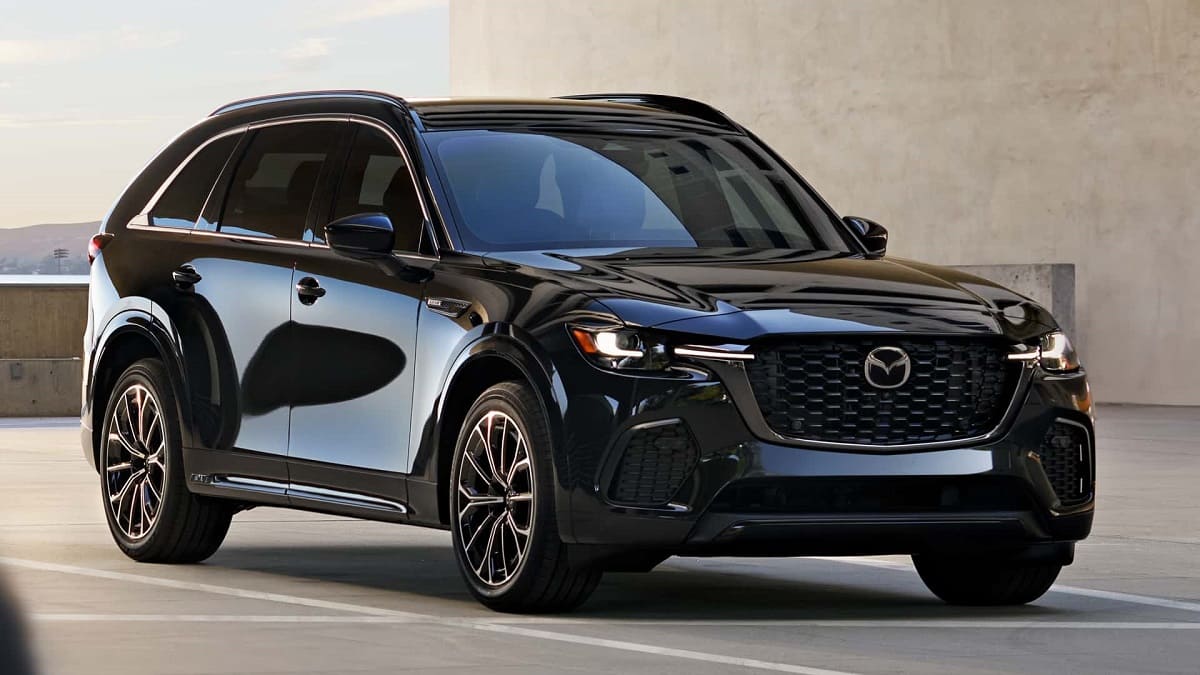
Mazda, however, continues to keep diesel technology alive in selected global markets. The latest example is the Mazda CX-70, which is available with an advanced inline-six diesel engine in several regions outside North America. Unfortunately for American buyers, this highly efficient version isn’t sold in the United States.
Alongside its impressive fuel economy, the diesel-powered CX-70 also stands out for its exceptional driving range. With fuel efficiency approaching 44 MPG and a 19.5-gallon fuel tank, the SUV can theoretically travel up to 850 miles on a single tank, making it one of the most capable long-distance crossovers in Mazda’s lineup.
The Mazda CX-70 Diesel Combines Efficiency and Performance
The Mazda CX-70 entered the lineup for the 2025 model year as a two-row alternative to the larger CX-90. While both SUVs share the same platform and many design elements, the CX-70 is aimed at buyers who want similar practicality without the need for a third row of seats.
In the United States, the CX-70 is available with two powertrain choices:
- A 3.3-liter turbocharged inline-six gasoline engine, offered in two output levels.
- A 2.5-liter gasoline engine paired with an electric motor in the plug-in hybrid (PHEV) version.
However, international markets receive an additional option that’s unavailable in North America.
e-Skyactiv-D Diesel Mild Hybrid
The CX-70 D50e features Mazda’s e-Skyactiv-D powertrain, combining:
- A 3.3-liter turbocharged inline-six diesel engine
- A mild hybrid electric system
Together, the system produces:
- 251 horsepower
- 406 lb-ft of torque
Power is delivered through an eight-speed automatic transmission, allowing the SUV to accelerate from 0 to 60 mph in approximately seven seconds.
Why American Buyers Can’t Get the Diesel CX-70
Although the diesel-powered CX-70 would likely appeal to drivers who value fuel economy and long-distance capability, Mazda currently limits this version to markets including:
- Australia
- New Zealand
- Selected Asian countries
At present, no manufacturer offers a diesel-hybrid passenger vehicle in the United States.
Several factors have contributed to this absence, including:
- Strong consumer preference for gasoline hybrids and EVs.
- The lingering negative perception surrounding diesel engines.
- Greater engineering complexity.
- Higher production costs.
Premium Interior with Family-Friendly Practicality
Outstanding fuel efficiency isn’t the only strength of the CX-70.
As one of Mazda’s newest SUVs, it also delivers a modern cabin packed with premium materials and advanced technology.
Every trim level includes leather upholstery, with an exclusive red leather interior available on the CX-70—a color option not offered on the larger CX-90.
Spacious Cargo Area
Despite having only two rows of seating, the CX-70 remains highly practical.
Cargo capacity includes:
- 40 cubic feet behind the rear seats.
- 75 cubic feet with the rear seats folded.
The space normally occupied by a third-row seat has been transformed into a large underfloor storage compartment.
Additional storage options throughout the cabin include:
- Multiple cup holders.
- Door pockets with bottle storage.
- A spacious glove compartment.
- An overhead sunglasses holder.
- Dual center-console storage compartments.
- Rear seatback pockets.
Modern Technology Comes Standard
The CX-70 also offers an impressive collection of infotainment and driver-assistance features.
Highlights include:
- A 12.3-inch infotainment display.
- A 12.3-inch digital instrument cluster (available on selected trims).
- A head-up display.
- Standard Apple CarPlay.
- Standard Android Auto.
Unlike many competitors, most infotainment functions are operated using Mazda’s rotary controller rather than relying entirely on touchscreen inputs.
Higher trim levels also feature a premium 12-speaker Bose audio system.
Other Mazda Models That Share the Diesel Platform
The CX-70 is built on Mazda’s Large Product Group platform, which also underpins several other SUVs that offer the same diesel powertrain in certain global markets.
Mazda CX-60
Introduced in 2022, the CX-60 is a midsize crossover that’s considered too compact for the American market.
Depending on the region, buyers can choose from:
- A 2.5-liter gasoline engine.
- A 3.3-liter inline-six gasoline engine.
- The e-Skyactiv-D diesel mild hybrid.
- A plug-in hybrid powertrain.
Mazda CX-80
The CX-80 expands on the CX-60 by adding a third row, allowing seating for six or seven passengers.
Available powertrains include:
- The e-Skyactiv-D diesel engine.
- The diesel mild hybrid system.
- A 3.3-liter gasoline inline-six.
- A plug-in hybrid version using a 2.5-liter gasoline engine.
Like the CX-60, the CX-80 isn’t available in the United States.
Mazda CX-90
The CX-90 is the only member of Mazda’s large SUV family currently sold in North America.
Introduced for the 2024 model year, it accommodates seven or eight passengers depending on configuration.
The U.S. version is powered exclusively by a 3.3-liter turbocharged inline-six gasoline engine, available in two output levels:
- 280 horsepower
- 340 horsepower
The Most Efficient Mazda SUVs Available in America
Since the diesel model isn’t offered in the United States, American buyers seeking maximum efficiency must choose one of Mazda’s plug-in hybrid SUVs.
Mazda CX-70 PHEV
The CX-70 Plug-in Hybrid delivers:
- 61 MPGe
- 26 MPG combined once the battery is depleted.
- Up to 32 miles of electric-only driving.
- Approximately 520 miles of total driving range.
Mazda CX-90 PHEV
The larger CX-90 Plug-in Hybrid achieves:
- 56 MPGe
- Around 500 miles of total range.
Although slightly less efficient due to its additional size and weight, it remains one of the most economical three-row SUVs in its class.
Why Diesel Vehicles Have Become So Rare
Diesel engines were once a popular choice in markets across the world, including the United States.
Over the past two decades, however, their popularity has declined dramatically.
Several factors have contributed to this shift.
The Rise of Electrification
Many of diesel’s traditional advantages—including excellent fuel economy, strong torque, and long-distance capability—can now be matched or exceeded by modern hybrid and electric powertrains while producing significantly lower emissions.
As a result, automakers have increasingly prioritized electrification over diesel development.
Tougher Emissions Regulations
Environmental standards have also become substantially stricter.
While earlier generations of diesel engines operated under relatively relaxed regulations, modern emissions requirements have made diesel technology more expensive and technically challenging to develop.
This has encouraged manufacturers to invest more heavily in hybrid and electric alternatives.
The Lasting Impact of Dieselgate
Another major factor behind diesel’s decline was the Dieselgate scandal.
In 2015, it was revealed that Volkswagen had installed software capable of detecting emissions tests and temporarily lowering emissions during testing procedures.
The scandal triggered global investigations involving Volkswagen and several other manufacturers, severely damaging public confidence in diesel-powered passenger vehicles.
The resulting reputational impact accelerated diesel’s decline across the automotive industry.
Diesel Still Has a Place—Just Not Everywhere
Although diesel engines have largely disappeared from mainstream passenger vehicles, they continue to serve an important role in applications where efficiency, durability, and high torque remain essential, particularly in long-haul transportation and commercial vehicles.
Mazda’s diesel-powered CX-70 demonstrates that modern diesel technology can still deliver impressive efficiency, strong performance, and remarkable driving range.
However, with growing demand for hybrid and electric vehicles—especially in North America—the chances of this version reaching U.S. dealerships remain slim, leaving American buyers to rely on Mazda’s increasingly capable plug-in hybrid alternatives.