

Summary
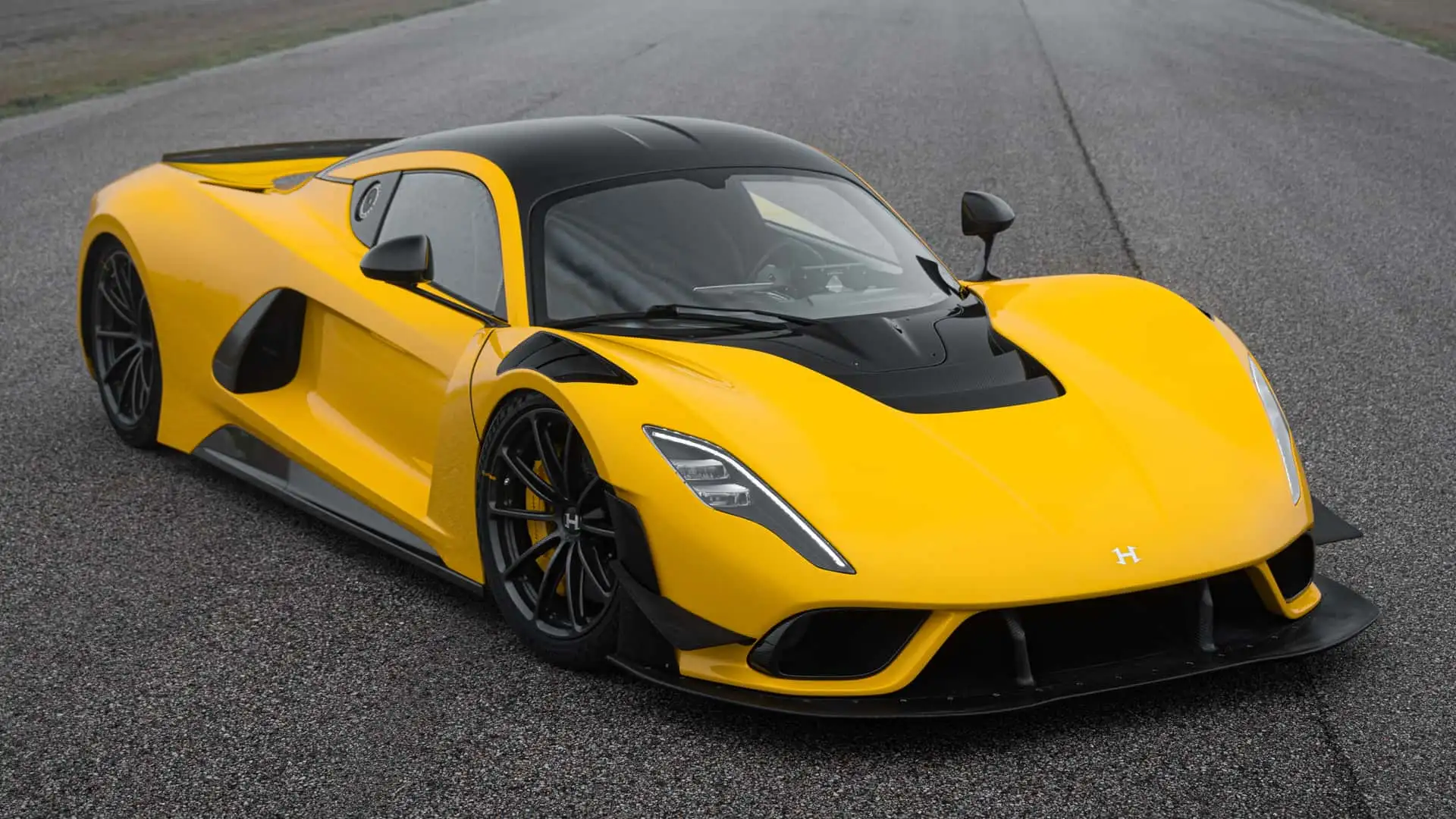
Hennessey is widely recognized for building extreme high-performance vehicles, from 1,000-horsepower six-wheel pickup trucks to equally powerful Mustangs and Camaros. However, the Texas-based performance company is also responsible for one of the world’s most outrageous hypercars—the Venom F5.
The latest version takes performance even further, producing an astonishing 2,031 horsepower from an engine mounted behind the driver.
For many enthusiasts, though, the most exciting feature isn’t the power output—it’s the transmission. The Venom F5-M is equipped with a genuine six-speed manual transmission, complete with a gated shifter that sends power exclusively to the rear wheels. According to Hennessey, it is the most powerful production car in the world with a manual gearbox.
Even better for driving enthusiasts, CarBuzz has learned it won’t be the last manual model the company builds.
Hennessey Remains Committed to Manual Transmissions
During a conversation with Nathan Malinick, Hennessey’s Design Director, manual gearboxes quickly became one of the main topics.
At a time when manual transmissions are becoming increasingly rare—especially in high-performance vehicles—the decision to pair one with more than 2,000 horsepower immediately stands out.
According to Malinick, both he and company founder John Hennessey share a strong appreciation for traditional manual transmissions, provided they’re mechanically authentic.
“I think, if you look across the board, what our customers want is the drama. They want the story. They want the experience. They want something that they can connect with—a material, authentic connection with the car, not synthetic.”
Although Malinick didn’t mention specific manufacturers, his comments appeared to contrast genuine manual gearboxes with electronically simulated systems.
Manufacturers such as Koenigsegg and Ferrari have introduced manual-style shifting systems that mimic the experience while operating advanced multi-clutch transmissions.
For example, Koenigsegg’s CC850 uses a system that transforms its nine-speed automatic into a simulated six-speed manual, while Ferrari’s 12Cilindri Manuale offers a similar experience, complete with a clutch pedal. Despite replicating the driving sensation, both systems remain electronically controlled.
Malinick emphasized that nothing replaces a true mechanical connection between the driver and the car.
“You see a lot of synthetic attempts at like a six-speed or a gated gearbox, and it’s cool. But it doesn’t compare to a true linked mechanical, you know, clutch-pedal in, first-gear experience. And you throw in all the five senses, like I said—the sound, the smell, the look, the feel. That’s what they want.”
— Nathan Malinick, Hennessey Design Director
More Manual Models Are Already in Development
The Venom F5 is produced in extremely limited numbers.
According to Malinick, the most popular version so far has been the Venom F5 Revolution Roadster, a track-focused open-top model limited to just 12 units.
However, he believes the newly introduced Venom F5-M could become the most sought-after version of the entire lineup.
“I will say though, the manuals are on pace to outdo [the Revolution] because it’s just so crazy. It’s what people want. Everyone wants a manual. Like our next year and a half of building cars, they’re all manuals.”
That production plan applies specifically to the remaining F5 models.
Looking further ahead, Malinick also confirmed that a successor to the Venom F5 is already under development—and it, too, will feature a manual transmission.
While he declined to reveal additional details, expectations are naturally high given that the current model already delivers more than 2,000 horsepower.
Managing More Than 2,000 HP Through the Rear Wheels
Sending 2,031 horsepower exclusively to the rear wheels through a manual gearbox might sound intimidating, but Malinick insists the Venom F5-M remains surprisingly approachable.
He explained that the car doesn’t unleash its full power immediately. Instead, maximum output becomes available toward the top of fourth gear, allowing the driver to make better use of the available traction before experiencing the engine’s complete performance.
That doesn’t mean the car is forgiving.
Malinick praised Hennessey’s engineering team for successfully balancing extreme performance with manageable drivability.
“It’s not an easy thing to achieve that, so all credit to them. It really is straightforward to drive. Now, you definitely have to respect this car—you really need to respect it. It’s like a race horse. You don’t get on that just for a leisurely kind of ride. But it’s very rewarding when you get it right, especially in the six-speed manual.”
The 300-MPH Goal Remains in Sight
The successor to the Venom F5 will likely remain under wraps until Hennessey makes another attempt at claiming the official production-car top-speed record.
The name F5 itself references the highest category on the original Fujita Scale, where tornado wind speeds range from 251 mph to more than 300 mph.
In theory, the hypercar is capable of reaching those speeds, although Hennessey has yet to officially achieve the milestone.
Malinick confirmed that the effort remains an active priority.
“It’s something that we’re actively working towards. It’s something that is way harder than people imagine. We are actively working towards it, and we’ll get back to you when we have something to tell you.”
During high-speed testing in July 2024, a Venom F5 crashed while traveling at more than 250 mph on the former Space Shuttle runway in Florida. Fortunately, the driver escaped without injury.
The incident highlighted just how challenging extreme speed testing can be.
As Malinick summed it up, pushing the limits is exactly what the Venom F5 was created to do.
“With this car, yeah, that’s the purpose of this car.”