

Summary
The initial online controversy surrounding the launch of the Ferrari Luce has now begun to fade. At this year’s Goodwood Festival of Speed, we had the opportunity to get an up-close look at Ferrari’s first-ever electric vehicle to determine whether seeing it in person changes the perception surrounding its design, technology, and overall appeal.
Ahead of a deeper discussion based on an exclusive interview about the Luce, this is a closer look at Ferrari’s bold new electric direction.
A Completely New Ferrari Design Language
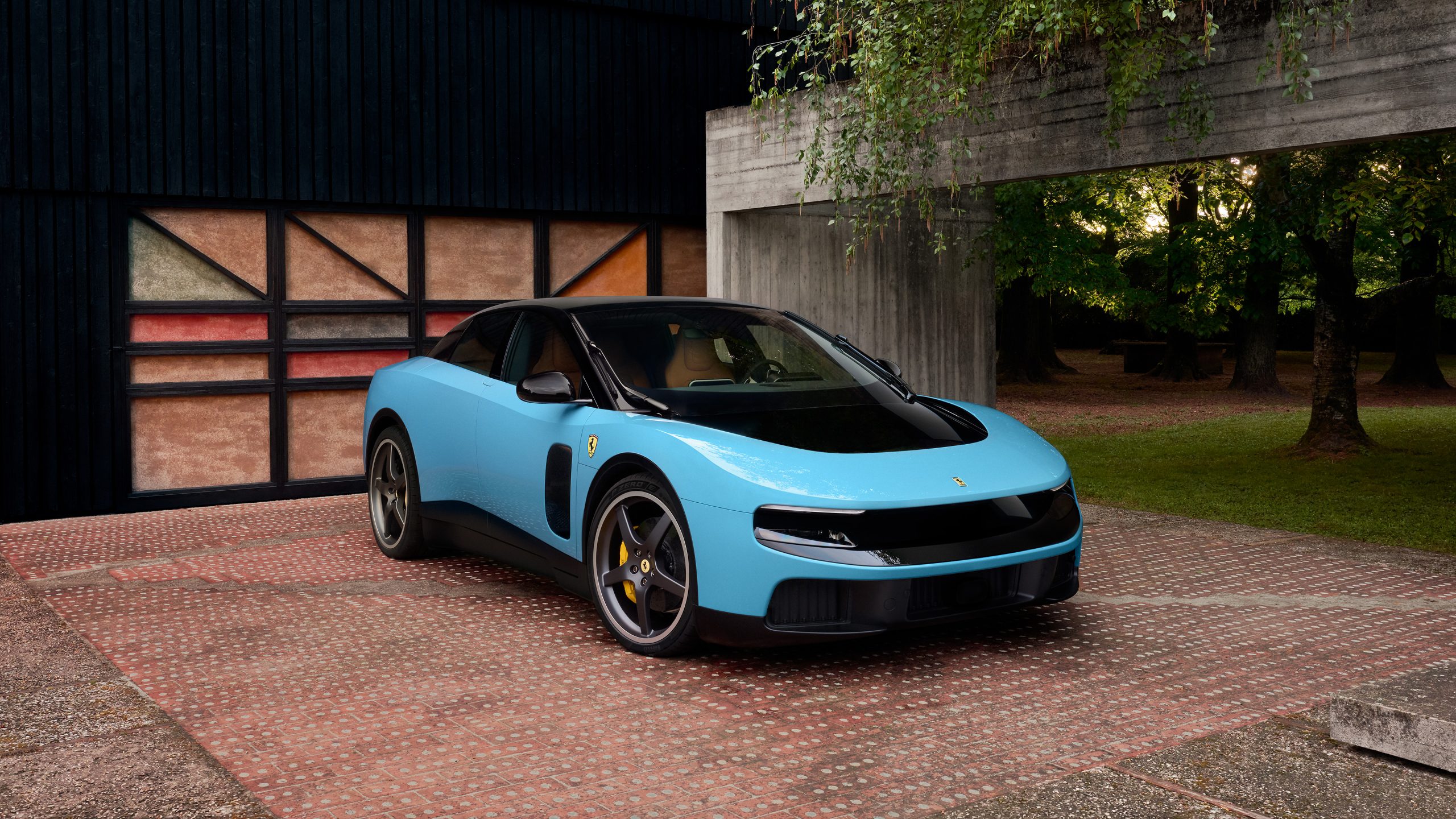
Without the traditional limitations of a combustion engine dictating vehicle proportions, the Ferrari Luce adopts a shape unlike any Ferrari before it.
Designed by Jony Ive, the model features an extended front hood, while the windshield appears to flow beneath a floating front wing element, creating a futuristic profile that breaks away from Ferrari’s conventional design philosophy.
At the rear, the strongest connection to Ferrari heritage comes through a set of four circular taillights. However, the unusual styling has generated mixed reactions, with some observers comparing the design to a Ferrari 360 that appears to have merged into the rear of another vehicle.
The Luce rides on massive 23-inch front wheels and 24-inch rear wheels, making them the largest wheels ever fitted to a roadgoing Ferrari. However, the most impressive engineering feature lies behind those wheels.
Quad-Motor Electric Powertrain Delivers 1,035 Horsepower
Ferrari has developed an advanced quad-motor electric powertrain for the Luce, providing independent control of all four wheels and enabling genuine torque vectoring capabilities.
Although the numbers may seem modest compared with some extreme electric hypercars, the system produces 1,035 horsepower and a combined 730 lb-ft of torque.
That output allows the Ferrari Luce to accelerate from 0 to 62 mph in just 2.5 seconds and reach 124 mph in 6.8 seconds, delivering the kind of performance expected from the Ferrari badge.
The First Five-Seat Ferrari Interior
One of the biggest departures from Ferrari tradition is found inside the cabin.
The Ferrari Luce features five seats, marking the first time a Ferrari production model has offered seating for that many passengers. Access is provided through four doors, including rear coach doors equipped with fully powered opening and closing functionality.
The interior design has received mixed reactions, but it represents another major shift for Ferrari. Once again created under the influence of Jony Ive, the cabin embraces a minimalist approach while incorporating tactile controls and carefully designed analog-digital elements.
A Blend of Analog Character and Modern Technology
One of the strongest aspects of the interior is the instrument cluster, which maintains a strong connection to traditional analog design.
At a time when many manufacturers are moving toward fully digital displays for cost efficiency and convenience, Ferrari’s decision to preserve analog-inspired elements provides a more emotional and driver-focused experience.
The steering wheel also follows this philosophy, combining clean modern lines with design cues inspired by classic Ferrari racing cars.
The Infotainment Screen Creates Debate
Not every interior element has received the same level of praise.
The large infotainment display, featuring a combination of physical controls, is mounted on a pivoting ball joint that allows it to rotate toward either the driver or passenger.
While the concept adds flexibility, its placement and integrated grab handle contrast with the otherwise clean and minimalist cabin design. For many critics, including this reviewer, the system feels like unnecessary complexity added for visual impact rather than genuine improvement.
Ferrari’s Electric Future Begins with the Luce
The Ferrari Luce represents one of the most significant transformations in the company’s history. From its unconventional exterior styling to its advanced quad-motor platform and five-seat interior, the EV challenges traditional expectations of what a Ferrari can be.
Whether enthusiasts ultimately embrace its futuristic approach remains uncertain, but the Luce undeniably marks the beginning of a new chapter for one of the world’s most iconic automotive brands.